


Land Subsidence
Land subsidence—the gradual settling or sudden sinking of the ground surface—poses a growing risk to critical infrastructure, flood conveyance systems, and long-term groundwater sustainability, particularly in heavily pumped overdrafted basins.
Agencies, water districts, agricultural groundwater users, municipalities, and industrial facilities rely on subsidence assessments to protect critical assets, quantify regulatory risk, and support defensible management decisions. EKI serves public- and private-sector clients where groundwater system resilience intersects with regional planning mandates, infrastructure-stability targets, and community water-supply reliability. In California, EKI supports clients under the Sustainable Groundwater Management Act (SGMA), delivering subsidence-aware analytics, critical head threshold evaluation, and scenario testing aligned to groundwater sustainability plans and Subsidence Management Monitoring Zones. Outside California, EKI partners with regional and national agencies—including USGS, basin authorities, and transboundary water operators working under comparable groundwater sustainability mandates—to integrate deformation diagnostics into long-term water-supply reliability, compaction risk modeling, and infrastructure resilience planning.
EKI applies data-driven and numerical modeling methods to diagnose and forecast land subsidence, supporting decisions that must be both scientifically verifiable and operationally meaningful. We integrate ML and AI analytics to detect patterns, anomalies, and long-term trends in ground deformation using satellite remote-sensing archives, regional monitoring networks, and large groundwater datasets. These workflows support scalable subsidence interpretation, rapid scenario emulation, and surrogate model development that enhance traditional monitoring with automation and predictive insight. EKI also deploys established groundwater simulation platforms—including MODFLOW‑6 and IWFM—to evaluate aquifer system stress, boundary condition influence, pumping sensitivity, and long-term groundwater glide paths under regulatory and climate uncertainty. Our team couples model diagnostics with critical head analysis to quantify pressure-head thresholds tied to compaction risk and evaluate deformation potential, helping clients distinguish physical subsidence trends from numerical boundary artifacts while ensuring model conclusions remain transparent, reproducible, and defensible for resource planning or litigation support.
Sample Projects: Land Subsidence
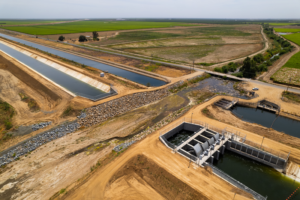
Subsidence Modeling and Management, Tulare County
More Projects to Come!
Connect with the EKI professional overseeing this specialty:

Nigel Chen, PhD, PE
Environmental Engineer